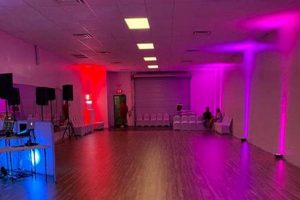
A dance environment specifically adapted for individuals with disabilities provides a supportive and inclusive space for movement and expression. These environments often incorporate modified teaching methods, sensory considerations, and adaptive equipment to cater to a diverse range of physical, cognitive, and emotional needs. For example, a studio may offer classes tailored to wheelchair users, individuals with Down syndrome, or those with autism spectrum disorder.
The significance of accessible dance instruction extends beyond mere recreational activity. It fosters physical fitness, improves coordination and motor skills, and promotes self-esteem and social interaction. Historically, access to performing arts opportunities for individuals with disabilities has been limited. The emergence of these specialized spaces reflects a growing recognition of the importance of inclusivity and the transformative power of dance for all.
The following sections will delve into the specific adaptations and benefits found within such environments, examining the impact on participants, the roles of instructors, and the overall contribution to a more inclusive and accessible arts landscape.
Guidance for a Dance Environment Serving Individuals with Disabilities
Considerations when establishing or operating a movement program tailored to meet the unique requirements of individuals with diverse abilities are presented below.
Tip 1: Instructor Training. Emphasize specialized training for instructors. Knowledge of diverse disability types, adaptive teaching methods, and safety protocols is crucial for effective and responsible instruction. For example, certifications in adapted physical education or dance/movement therapy can enhance instructor competence.
Tip 2: Sensory Environment Management. Carefully manage the sensory environment. Dim lighting, noise-canceling features, and the option to use weighted blankets or sensory toys can mitigate overstimulation for individuals with sensory processing sensitivities. A calm and predictable setting can improve focus and engagement.
Tip 3: Accessible Facility Design. Ensure the physical accessibility of the facility. Ramps, wide doorways, accessible restrooms, and adaptable flooring are essential for wheelchair users and individuals with mobility impairments. Consider contrasting color schemes and tactile markers for those with visual impairments.
Tip 4: Communication Strategies. Implement clear and concise communication strategies. Utilize visual aids, simplified language, and repetition to facilitate understanding for individuals with cognitive or communication challenges. Encourage non-verbal communication and provide opportunities for expressive movement.
Tip 5: Individualized Program Planning. Develop individualized program plans. Assess each participant’s strengths, needs, and goals to create a tailored dance experience. Regular progress monitoring and adjustments are necessary to optimize outcomes and ensure participant satisfaction.
Tip 6: Collaboration with Professionals. Foster collaboration with therapists and medical professionals. Occupational therapists, physical therapists, and special education teachers can provide valuable insights and support in adapting activities and addressing specific participant needs. Interdisciplinary collaboration enhances the quality and effectiveness of the program.
Tip 7: Positive and Inclusive Atmosphere. Cultivate a positive and inclusive atmosphere. Encourage peer support, celebrate individual achievements, and promote a sense of belonging. Focus on abilities rather than limitations, and create a space where all participants feel valued and respected.
These strategies, when thoughtfully implemented, contribute to a dance experience that is both enriching and empowering for individuals with disabilities, fostering physical, emotional, and social well-being.
The subsequent sections will explore the long-term impact and expanding role of adaptive movement programs within the broader community.
1. Adaptive Equipment

The presence of adaptive equipment is a defining characteristic of a dance environment designed to serve individuals with disabilities. Its inclusion directly addresses physical limitations, enabling participation for those who might otherwise be excluded. For instance, individuals with mobility impairments benefit from the use of modified ballet barres, providing stability and support during exercises. Similarly, specialized seating or wheelchair adaptations allow individuals with limited trunk control to engage in partnered movements. The absence of such equipment effectively bars certain individuals from participating, rendering the environment less inclusive and negating the intended benefits. The selection and application of appropriate tools are foundational to the efficacy of the movement instruction offered.
Consider the example of a dancer with cerebral palsy who utilizes ankle weights and supportive braces. These tools enable improved control and stability, allowing for the execution of more complex movements. Furthermore, sensory-sensitive individuals may benefit from weighted blankets during rest periods or visual aids to aid with step memorization. The careful integration of adapted tools and sensory materials enhances safety and builds confidence by removing barriers to engagement. Understanding the specific needs and challenges of individual participants is paramount to selecting and implementing adaptive devices effectively.
In summary, adaptive equipment plays a vital role in a dance program designed for individuals with disabilities. It enhances inclusivity, promoting physical ability, and fostering participation. While implementation can present challenges related to cost and specialized knowledge, the profound benefits for participants make it an indispensable component. Its utilization exemplifies a commitment to accessibility and the transformative potential of movement expression for all.
2. Trained Instructors

The effectiveness of a dance environment designed for individuals with disabilities hinges directly on the expertise of its instructors. A qualified instructor possesses not only dance proficiency but also a deep understanding of various disability types, including physical, cognitive, and sensory considerations. Lack of appropriate training can lead to ineffective instruction, potential injury, and an exclusionary environment that undermines the purpose of the program. For example, an instructor unfamiliar with the specific needs of individuals with autism spectrum disorder may inadvertently create an overstimulating environment, leading to distress and withdrawal. In contrast, a well-trained instructor can adapt teaching methods, provide clear and concise instructions, and manage sensory stimuli to promote engagement and learning.
The connection between instructor training and positive participant outcomes is evident in numerous scenarios. An instructor trained in adapted physical education can modify dance movements to accommodate varying levels of mobility, allowing wheelchair users to participate fully. Knowledge of sensory integration techniques enables instructors to create a calming and supportive environment for individuals with sensory processing difficulties. Furthermore, training in communication strategies facilitates effective interaction with individuals who have cognitive or communication challenges. These skills empower instructors to tailor their approach to meet the unique needs of each participant, fostering a sense of belonging and maximizing progress.
In summation, the presence of trained instructors forms the bedrock of any successful dance environment serving individuals with disabilities. Such training enhances inclusivity and promotes effective interaction. While the investment in specialized training may present a challenge, the positive influence on participant experiences and outcomes renders it an indispensable component. The development of instructor competency must be prioritized to realize the full potential of dance as a vehicle for personal growth and social inclusion.
3. Sensory Considerations

Sensory considerations are paramount in designing and operating a dance environment tailored for individuals with disabilities. The sensory experience within such a space can significantly impact participation, comfort, and overall engagement, necessitating careful attention to environmental factors and individual sensitivities.
- Auditory Environment
The auditory environment encompasses sound levels, types of sounds, and overall acoustic properties. In a movement program, loud or jarring noises, echoing spaces, or overlapping auditory stimuli can be overwhelming for individuals with auditory processing sensitivities. Modification strategies include soundproofing materials, noise-canceling headphones, and the strategic use of calming music or nature sounds. Minimizing auditory distractions promotes focus and reduces anxiety.
- Visual Environment
The visual elements of the space, including lighting, colors, and visual stimuli, play a critical role in creating a comfortable and supportive atmosphere. Bright, fluorescent lighting can be visually overwhelming, while flickering lights can trigger seizures in individuals with photosensitivity. Utilizing adjustable lighting, natural light sources, and calming color palettes can create a more soothing and visually accessible environment. Reducing visual clutter and providing clear visual cues can also enhance orientation and reduce confusion.
- Tactile Considerations
Tactile considerations encompass the surfaces and textures within the environment that come into contact with participants. Some individuals exhibit tactile defensiveness, experiencing discomfort or aversion to certain textures. Soft, smooth flooring, comfortable clothing options, and the availability of weighted blankets or sensory toys can mitigate tactile sensitivities. Careful selection of props and materials used in dance activities can also minimize tactile discomfort.
- Proprioceptive and Vestibular Input
Proprioception (body awareness) and vestibular input (sense of balance) are integral to movement and coordination. Individuals with proprioceptive or vestibular processing difficulties may experience challenges with balance, spatial awareness, and motor control. Activities that provide structured proprioceptive and vestibular input, such as weighted vests, resistance bands, or slow, rhythmic movements, can improve body awareness, balance, and coordination. Modifying movements to accommodate individual limitations ensures safe and successful participation.
Integrating these sensory considerations into the design and operation of a dance environment for individuals with disabilities is essential for creating a supportive and inclusive space. Addressing sensory sensitivities promotes comfort, reduces anxiety, and enables participants to engage fully in the transformative power of dance. These considerations must inform all aspects of the program, from the physical environment to the instructional methods employed.
4. Individualized Instruction

Individualized instruction is not merely a beneficial addition but a foundational element within a dance environment designed for individuals with disabilities. The inherent diversity in abilities, needs, and learning styles necessitates a tailored approach that transcends generic instruction. A standardized curriculum, while potentially suitable for some, can inadvertently exclude or disadvantage those with unique requirements. This connection underscores a cause-and-effect relationship: neglecting individualized strategies can lead to decreased engagement, limited progress, and a diminished sense of accomplishment for participants. The alternativethoughtfully designed, participant-centered instructionfosters an environment where each individual can thrive.
The application of personalized teaching methods manifests in numerous ways within such environments. For example, a dancer with visual impairment may benefit from tactile cues and verbal descriptions of movements, rather than relying solely on visual demonstration. An individual with autism spectrum disorder might require a structured and predictable routine, with clear communication and minimal sensory overload. A person with Down syndrome may learn most effectively through repetition and multi-sensory experiences. These examples underscore the practical significance of understanding individual needs and adapting instructional strategies accordingly. The capacity to modify movement sequences, provide alternative forms of expression, and offer personalized support mechanisms is critical to ensuring accessibility and promoting positive outcomes.
In summary, individualized instruction is an indispensable component of a movement program designed for individuals with disabilities. Neglecting its implementation can undermine the very purpose of the studio. This approach promotes inclusivity, maximizes individual potential, and fosters an environment where every participant can experience the transformative power of dance. Prioritizing individualized strategies ensures not only accessibility but also the profound impact of movement expression for all.
5. Inclusive Environment
The creation of an inclusive environment is a critical determinant of success for a dance program serving individuals with disabilities. This environment extends beyond mere physical accessibility, encompassing social, emotional, and attitudinal dimensions to foster a sense of belonging and shared experience.
- Social Interaction and Peer Support
Meaningful social interaction and peer support are central facets of an inclusive environment. Structured and unstructured opportunities for participants to interact, collaborate, and support one another promote social skills development and a sense of community. For example, group warm-ups, partnered exercises, and collaborative choreography projects can foster positive relationships and reduce feelings of isolation. The presence of peer mentors, individuals with similar disabilities who serve as role models, can further enhance the sense of belonging.
- Respect and Acceptance
An environment characterized by respect and acceptance is vital for promoting self-esteem and confidence. Instructors and staff must model inclusive language and behavior, challenging stereotypes and fostering appreciation for diversity. Celebrating individual achievements, regardless of perceived ability, and creating a culture of positive reinforcement contribute to a supportive and empowering atmosphere. Addressing instances of bias or discrimination promptly and effectively reinforces the commitment to inclusivity.
- Adaptable Communication Strategies
Inclusive communication strategies are essential for ensuring that all participants can understand and express themselves effectively. Utilizing visual aids, simplified language, and non-verbal cues can facilitate communication for individuals with cognitive or communication challenges. Encouraging participants to use their preferred communication methods, including assistive technology, and providing opportunities for creative expression promotes autonomy and self-advocacy. Training staff in effective communication techniques ensures that all interactions are respectful and empowering.
- Collaborative Program Design
Involving participants and their families in program design and evaluation fosters a sense of ownership and ensures that the program meets their needs effectively. Soliciting feedback on activities, (environment), and instructional methods allows for continuous improvement and adaptation. Creating advisory boards or focus groups that include participants, families, and community stakeholders ensures that the program reflects the values and priorities of the individuals it serves. Collaborative program design promotes a sense of shared responsibility and strengthens the connection between the dance studio and the community.
These facets of an inclusive environment work in concert to create a movement program that is not only accessible but also transformative for individuals with disabilities. By fostering social connections, promoting respect and acceptance, utilizing adaptable communication strategies, and involving participants in program design, a dance studio can create a space where all individuals feel valued, empowered, and able to reach their full potential through the art of movement.
6. Progress Monitoring

Systematic progress monitoring is a vital component within a dance environment tailored for individuals with disabilities. Its implementation allows for the objective assessment of participant development, informs instructional adjustments, and provides valuable data for program evaluation. The absence of such monitoring mechanisms can lead to ineffective instruction, delayed intervention, and a lack of accountability.
- Objective Assessment of Skill Acquisition
Formal tracking of skill acquisition enables instructors to determine the extent to which participants are mastering targeted movements and techniques. Examples include documented improvements in range of motion, balance, coordination, and expressive capacity. In the setting of accessible instruction, instructors apply specific and measurable techniques to evaluate the effectiveness of the program in aiding the development of skills for its participants.
- Data-Driven Instructional Adjustments
The insights derived from progress monitoring directly inform instructional adjustments, ensuring that teaching methods are aligned with individual needs and learning styles. For instance, if a participant is struggling with a particular movement, the instructor can modify the activity, provide additional support, or introduce alternative approaches. This continuous feedback loop optimizes the learning process and promotes individualized progress.
- Identification of Potential Barriers
Progress monitoring can identify potential barriers to participation or learning, such as physical limitations, sensory sensitivities, or emotional challenges. Early identification of these barriers allows for timely intervention, whether through adaptive equipment, modifications to the environment, or referrals to other professionals. Addressing barriers proactively maximizes participant engagement and prevents frustration or discouragement.
- Program Evaluation and Accountability
Data collected through progress monitoring provides valuable information for program evaluation, demonstrating the effectiveness of the program in achieving its goals and outcomes. This data can be used to justify funding requests, demonstrate program impact to stakeholders, and identify areas for improvement. Regular program evaluation ensures accountability and promotes continuous quality enhancement.
In summary, systematic progress monitoring is integral to the success and sustainability of a dance environment designed for individuals with disabilities. By providing objective data on participant progress, informing instructional adjustments, identifying potential barriers, and supporting program evaluation, it ensures that the program is meeting the needs of its participants and achieving its intended outcomes. This component contributes to the overall effectiveness and value of the movement program within the broader community.
Frequently Asked Questions
This section addresses common inquiries and concerns related to dance environments specifically designed to serve individuals with disabilities. The information presented aims to provide clarity and promote understanding of the unique aspects of these programs.
Question 1: What distinguishes a “special needs dance studio” from a typical dance studio?
A program designed for individuals with disabilities incorporates specialized training for instructors, adaptive equipment, sensory considerations, and individualized instruction not typically found in standard studios. The focus extends beyond technical skill to encompass physical, cognitive, and emotional well-being.
Question 2: What types of disabilities can be accommodated in a dance environment?
The scope of disabilities addressed varies, with some environments specializing in particular conditions (e.g., autism spectrum disorder, Down syndrome) while others offer broader accessibility. Physical, cognitive, sensory, and emotional disabilities can be accommodated through appropriate adaptations and individualized support.
Question 3: How is instructor training relevant in these studios?
Instructors require specialized training in adapted physical education, disability awareness, and communication strategies. This knowledge enables them to modify movements, manage sensory stimuli, and provide effective support to individuals with diverse needs. Without proper training, the risk of injury and ineffective instruction increases substantially.
Question 4: What adaptive equipment is typically utilized in such studios?
Equipment may include modified ballet barres, wheelchair adaptations, weighted blankets, sensory toys, and visual aids. The selection of appropriate tools is dependent on the specific needs of the participants and aims to enhance accessibility and promote safe participation.
Question 5: How are sensory sensitivities addressed in a setting designed for those with special needs?
Sensory sensitivities are addressed through careful management of the environment. This includes controlling lighting, noise levels, and tactile stimuli. Utilizing calming colors, soundproofing materials, and providing options for sensory regulation can minimize overstimulation and promote a comfortable learning environment.
Question 6: What are the anticipated benefits of participation in a dance program serving individuals with disabilities?
Potential benefits include improved physical fitness, enhanced coordination and motor skills, increased self-esteem and confidence, and enhanced social interaction. Participation can also foster creative expression, emotional release, and a sense of accomplishment.
In summary, a successful environment for individuals with disabilities necessitates trained instructors, adapted equipment, a focus on sensory well-being, and individualized support strategies. These elements, when thoughtfully integrated, contribute to a positive and transformative experience for all participants.
The following sections will examine case studies and exemplary models of successful programs designed for individuals with disabilities.
Concluding Summary
This exploration has illuminated the critical components of a “special needs dance studio”, emphasizing the need for specialized training, adaptive equipment, sensory awareness, and individualized instruction. The absence of these elements compromises accessibility and diminishes the potential for positive outcomes. Successful implementation fosters physical, emotional, and social well-being for individuals with disabilities.
Continued development and refinement of movement programs designed for individuals with disabilities are essential to expanding access to the arts and promoting inclusive communities. Further investment in instructor training, adaptive technology, and research into best practices is needed to realize the full potential of these transformative environments.
![Level Up at [City] Just Dance Studio: Fitness & Fun! | Study Travel Abroad | Explore Educational Trips & Global Learning Opportunities](https://studyhardtravelsmart.com/wp-content/uploads/2026/05/th-293-300x200.jpg "Level Up at [City] Just Dance Studio: Fitness & Fun! Study Travel Abroad | Explore Educational Trips & Global Learning Opportunities")