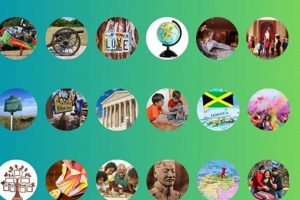
Educational experiences within the realm of civics, history, geography, and economics can be designed to maximize engagement and enjoyment for students. These instructional strategies often incorporate games, simulations, collaborative projects, and creative expression to foster a deeper understanding of complex social concepts. For instance, a class studying the American Revolution might participate in a mock trial of a historical figure, or a unit on geography could involve creating travel brochures for different countries.
The incorporation of engaging methods into social studies education yields numerous advantages. Students demonstrate enhanced knowledge retention, increased critical thinking skills, and a greater appreciation for the subject matter. Historically, rote memorization and textbook-centered instruction have been the dominant paradigms in social studies education; however, contemporary pedagogical approaches emphasize active learning and the development of relevant skills for the 21st century. These approaches cultivate informed and engaged citizens capable of participating meaningfully in democratic processes.
This article will delve into specific methods and examples that promote active participation and enthusiasm in the social studies classroom. It will explore the design and implementation of simulations, project-based learning experiences, and technology integration to foster a dynamic and enriching learning environment. Strategies for adapting these methodologies for diverse learners and educational contexts will also be addressed.
Tips for Implementing Engaging Social Studies Education
Enhancing the learning experience in social studies requires careful consideration of instructional design and student engagement. The following tips provide guidance on creating a dynamic and effective educational environment.
Tip 1: Incorporate Primary Sources: Direct interaction with historical documents, photographs, and artifacts allows students to analyze information critically and develop informed perspectives. For example, examining letters from soldiers during wartime can provide a more profound understanding of the human impact of conflict.
Tip 2: Utilize Simulations and Role-Playing: Simulations offer immersive experiences that promote active participation and critical thinking. A mock trial, model United Nations, or historical re-enactment can bring abstract concepts to life.
Tip 3: Employ Project-Based Learning: Project-based learning encourages students to investigate real-world issues and develop solutions through collaborative projects. Examples include creating a documentary on local history or designing a proposal for community development.
Tip 4: Integrate Technology Effectively: Technology can enhance the learning experience through virtual field trips, interactive timelines, and collaborative online platforms. Ensure that technology is used purposefully to support learning objectives and not simply as a novelty.
Tip 5: Foster Collaborative Learning Environments: Group projects, debates, and peer teaching promote communication, collaboration, and critical thinking skills. Structured activities that encourage active participation from all students are essential.
Tip 6: Emphasize Inquiry-Based Learning: Encourage students to ask questions, conduct research, and draw conclusions based on evidence. Facilitate exploration of multiple perspectives and interpretations.
Tip 7: Connect to Current Events: Relate historical and social concepts to current events to demonstrate their relevance and impact on contemporary society. This connection enhances student engagement and promotes a deeper understanding of the world.
The implementation of these strategies will cultivate a more engaged and knowledgeable student body. By prioritizing active participation, critical thinking, and real-world application, social studies education can become a transformative experience.
The subsequent sections of this article will provide detailed examples and practical guidance on implementing these tips effectively within diverse educational settings.
1. Active Participation

Active participation constitutes a core element of education, particularly within the context of social studies. The correlation between active participation and effective education resides in the enhancement of cognitive engagement, knowledge retention, and skill development. Activities fostering active involvement transcend passive learning, requiring students to become agents in their own educational process. This can be achieved through simulations, debates, role-playing scenarios, and hands-on projects where students are not merely recipients of information, but active analysts and creators of knowledge. For example, instead of simply reading about the Civil Rights Movement, students may participate in a mock trial related to a key event, assume roles of historical figures in a debate, or collaboratively design a museum exhibit showcasing primary source documents. These activities transform abstract concepts into tangible and memorable experiences, reinforcing a deeper comprehension of the subject matter.
The implementation of instructional strategies that prioritize active participation has direct implications for learning outcomes. Active involvement compels students to think critically, analyze diverse perspectives, and synthesize information. This process enhances problem-solving skills, cultivates empathy, and equips individuals with the ability to navigate complex social issues. In the absence of active engagement, the educational experience can be characterized by rote memorization and limited retention. Conversely, active engagement fosters a deeper intellectual curiosity and a lifelong commitment to learning. Consider the difference between reading about urban planning versus designing a model city to address societal challenges. The latter provides a real-world context for theoretical concepts and fosters the development of problem-solving abilities.
In summary, active participation is crucial for effective learning in social studies. The integration of methods that require students to actively engage with the subject matter enhances comprehension, critical thinking skills, and a desire for continued learning. Recognizing the practical implications of active participation enables educators to design instructional strategies that foster the development of informed and engaged citizens. The key to success is to move beyond passive learning models to create active engagement opportunities that improve educational results.
2. Critical Thinking

The incorporation of critical thinking within engaging social studies methods is not merely a pedagogical enhancement but a foundational requirement for developing informed and responsible citizens. The cause-and-effect relationship is evident: enriching activities necessitate analytical assessment, leading to a deeper, more nuanced comprehension of social phenomena. Without critical analysis, hands-on projects or simulations become superficial exercises, devoid of genuine educational value. For example, a simulation of the Constitutional Convention, while engaging, becomes truly impactful only when students critically evaluate the compromises made, the perspectives excluded, and the long-term consequences of the decisions reached. The capacity to dissect complex information, recognize biases, and formulate reasoned judgments is the essence of critical thinking and a vital component of effective social studies education. This approach prepares individuals to engage constructively in civic discourse and contribute to a more informed society.
Consider the practical application of critical thinking in analyzing historical sources. Students encountering primary documents from different perspectives are challenged to discern the author’s intent, identify potential biases, and corroborate information with other sources. This process cultivates a deeper understanding of historical events and their context, moving beyond simplistic narratives. Moreover, the application of critical thinking skills transcends the classroom. By analyzing current events, evaluating media reports, and assessing political claims, individuals develop the ability to make informed decisions and participate effectively in a democratic society. Such practical applications reinforce the importance of integrating critical thinking into all facets of social studies education.
In conclusion, the convergence of engaging social studies methods and critical thinking capabilities is imperative for fostering a knowledgeable and engaged citizenry. While enjoyable activities may capture student interest, the true educational value resides in the development of analytical skills, the ability to evaluate information, and the capacity to form reasoned judgments. The challenge lies in designing activities that not only captivate students but also promote deep intellectual engagement. By prioritizing critical thinking, social studies education can equip individuals with the tools necessary to navigate the complexities of the modern world and contribute to a more informed and just society.
3. Real-World Relevance

In the domain of social studies education, the incorporation of activities exhibiting demonstrable real-world relevance is crucial for enhancing student engagement and fostering a deeper comprehension of complex societal concepts. These activities serve as a bridge connecting theoretical knowledge acquired in the classroom to practical application in authentic contexts, thereby amplifying the educational impact.
- Civic Engagement Projects
Civic engagement projects provide students with opportunities to address genuine community needs through direct action. Examples include organizing voter registration drives, volunteering at local organizations, or advocating for policy changes at the local or state level. These experiences impart critical skills in leadership, communication, and problem-solving while reinforcing the importance of active citizenship.
- Simulations of Economic Systems
Simulations designed to model economic systems allow students to experience the complexities of supply and demand, resource allocation, and market dynamics. By participating in these simulations, students gain a deeper appreciation for the factors influencing economic decisions and the interconnectedness of global economies. They learn the impact of policy decisions on various stakeholders, fostering economic literacy.
- Analysis of Current Events
Integrating the analysis of current events into social studies curricula provides a dynamic and relevant context for understanding historical and social trends. Students can examine contemporary issues through the lens of social science principles, fostering critical thinking and informed perspectives on global challenges. This approach also encourages the development of media literacy skills, enabling students to discern credible sources of information from misinformation.
- Historical Re-enactments with Modern Parallels
Historical re-enactments become more impactful when students are prompted to draw parallels between past events and contemporary issues. This comparative analysis encourages a deeper understanding of historical patterns and the enduring relevance of historical lessons. By identifying recurring themes and exploring the continuities and changes across time periods, students develop a more sophisticated understanding of human history.
The convergence of these activities cultivates a richer educational experience that extends beyond the confines of the classroom. Students not only acquire theoretical knowledge but also develop practical skills and a sense of civic responsibility. By demonstrating the direct relevance of social studies concepts to real-world challenges, educators can inspire a lifelong interest in learning and a commitment to contributing to the betterment of society.
4. Collaborative Learning
The integration of collaborative learning methodologies within social studies fosters a dynamic and engaging educational experience. The synergistic interaction among students promotes a deeper understanding of complex concepts and enhances the development of essential skills applicable beyond the classroom setting. These group-oriented approaches complement the more traditional, individualistic methods of instruction, providing a well-rounded pedagogical approach.
- Enhanced Knowledge Construction
Collaborative learning facilitates the construction of knowledge through the exchange of ideas and perspectives. Students actively participate in discussions, share insights, and challenge assumptions, collectively building a more comprehensive understanding of the subject matter. For instance, in a group project examining the causes of the French Revolution, individual students may research different contributing factors, such as economic inequality, political oppression, or Enlightenment ideals. By sharing their findings and engaging in constructive debate, the group develops a richer, more nuanced understanding of the historical context.
- Development of Communication Skills
Collaborative activities inherently require students to communicate effectively with their peers. They must articulate their ideas clearly, listen attentively to others, and negotiate respectfully to reach consensus. Role-playing simulations, for example, necessitate clear and concise communication, as students must adopt the perspectives of historical figures and engage in dialogue with others. These interactions hone critical communication skills that are essential for success in both academic and professional endeavors.
- Cultivation of Critical Thinking Abilities
Collaborative learning environments encourage students to think critically about the information they encounter. By engaging in discussions and debates, students are challenged to evaluate evidence, analyze arguments, and form reasoned judgments. A group assignment requiring students to analyze primary source documents from the Civil Rights Movement, for instance, necessitates critical examination of the authors’ biases, perspectives, and intended audiences. Through this process, students develop the capacity to think critically and independently.
- Promotion of Social Responsibility
Collaborative learning cultivates a sense of social responsibility and encourages students to work together towards common goals. Group projects, for example, require students to share responsibilities, manage their time effectively, and support one another’s learning. By participating in these activities, students develop a sense of ownership and accountability, learning the importance of teamwork and cooperation in achieving shared objectives. This fosters a sense of community and promotes responsible citizenship.
The synergistic relationship between collaborative learning and engaging activities in social studies enhances knowledge construction, promotes essential skill development, and cultivates social responsibility. This integrated approach enables students to become active participants in their own learning and empowers them to contribute meaningfully to society. The result is a more informed, engaged, and responsible citizenry, equipped with the skills and knowledge necessary to navigate the complexities of the modern world.
5. Inquiry-Based Exploration

Inquiry-based exploration serves as a potent catalyst for transformative learning within social studies, shifting the pedagogical focus from passive knowledge reception to active knowledge construction. This approach, when integrated effectively, infuses educational activities with an element of discovery and personal investment, thereby aligning with the broader goal of creating intrinsically motivating and impactful social studies experiences.
- Formulating Research Questions
The foundation of inquiry-based exploration lies in the articulation of compelling research questions. These questions, often stemming from students’ own curiosities or observations, guide their investigation and provide a framework for analysis. For example, instead of simply learning about the Civil Rights Movement, students might formulate the question, “To what extent did economic factors influence the success of the Civil Rights Movement?” This question directs their exploration towards analyzing the role of economic boycotts, disparities in wealth, and the economic consequences of segregation. Formulating such questions transforms the learning process from a passive absorption of information to an active pursuit of understanding, enhancing engagement.
- Gathering and Analyzing Evidence
Inquiry-based exploration necessitates the collection and critical analysis of diverse sources of information. Students learn to evaluate the credibility of sources, identify biases, and synthesize information to construct well-supported arguments. In a study of the American Revolution, for example, students might examine primary source documents such as letters, pamphlets, and official records, alongside secondary source interpretations. They would then analyze this evidence to form their own conclusions about the causes of the revolution, the motivations of the key figures, and the impact of the conflict on different groups. This process fosters critical thinking and strengthens analytical skills.
- Developing and Communicating Conclusions
The culmination of inquiry-based exploration involves the development and communication of well-reasoned conclusions supported by evidence. Students present their findings through various formats, such as research papers, presentations, debates, or multimedia projects. This requires them to synthesize their research, organize their thoughts, and articulate their arguments effectively. For instance, students investigating the impact of globalization on local communities might present their findings through a documentary film, showcasing interviews with community members, data visualizations, and policy recommendations. This not only reinforces their understanding of the topic but also enhances their communication skills.
- Reflecting on the Learning Process
Inquiry-based exploration also encourages students to reflect on their own learning process. This metacognitive awareness helps them to identify their strengths and weaknesses, refine their research strategies, and develop a deeper understanding of how they learn best. This reflection can take various forms, such as journaling, self-assessment, or peer feedback. For example, after completing a project on the history of immigration, students might reflect on the challenges they encountered, the strategies they used to overcome those challenges, and the lessons they learned about the research process. This fosters self-awareness and promotes lifelong learning.
These facets underscore how inquiry-based exploration can transform social studies into a more engaging and personally meaningful experience. By promoting active learning, critical thinking, and self-reflection, this approach empowers students to become informed, engaged, and responsible citizens. The emphasis on exploration and discovery directly contributes to the creation of experiences within social studies that foster curiosity, excitement, and a genuine love of learning.
Frequently Asked Questions
The following frequently asked questions address common concerns and misconceptions regarding the incorporation of engaging methodologies within social studies curricula. These responses aim to provide clarity and practical guidance for educators.
Question 1: What constitutes an effective method for promoting engagement in social studies?
Effective engagement strategies encompass active participation, critical thinking, real-world relevance, collaborative learning, and inquiry-based exploration. These approaches transform the learning experience from passive knowledge reception to active knowledge construction.
Question 2: How can simulations be effectively integrated into social studies instruction?
Simulations should accurately model real-world scenarios and incorporate opportunities for critical decision-making. Clear learning objectives and debriefing sessions are essential to maximize the educational impact of the simulation.
Question 3: What is the role of technology in enhancing learning in social studies?
Technology can provide access to primary sources, facilitate virtual field trips, and enable collaborative learning. However, technology integration must be purposeful and aligned with specific learning objectives, rather than a novelty.
Question 4: How can teachers assess student learning in engaging social studies activities?
Assessment methods should align with the learning objectives of the activity and may include project-based assessments, presentations, debates, and reflective writing. Traditional assessments can be adapted to evaluate higher-order thinking skills.
Question 5: How can real-world relevance be incorporated into the social studies curriculum?
Connections to current events, civic engagement projects, and community partnerships can demonstrate the practical application of social studies concepts and promote civic responsibility.
Question 6: What are the key considerations for adapting engaging social studies activities for diverse learners?
Differentiation strategies, such as providing varied levels of support, modifying task complexity, and offering multiple modes of representation, are essential for meeting the needs of diverse learners.
The application of these strategies will foster a more dynamic and effective social studies curriculum. By prioritizing active participation, critical thinking, and real-world application, social studies education can be a transformative experience.
The following section will provide resources and further reading to support the effective implementation of engaging methodologies in social studies education.
Fun Social Studies Activities
The exploration of approaches to the social sciences has underscored the critical role of engagement in promoting deeper understanding and lasting knowledge. Active participation, critical thinking, real-world application, collaborative learning, and inquiry-based exploration have been identified as core components of effective and stimulating strategies. The successful integration of these elements transforms education from a passive reception of information to an active construction of knowledge.
The challenge for educators lies in the continued development and implementation of methods that cultivate informed, engaged, and responsible citizens. A commitment to enriching methodologies is essential to ensuring that social studies education remains relevant, stimulating, and ultimately, transformative for all learners. The ongoing pursuit of innovation in social studies pedagogy is vital for fostering a populace equipped to navigate the complexities of the modern world.