The duration visitors spend in queues for attractions at Universal Studios Orlando represents a significant factor in the overall park experience. These intervals, fluctuating based on ride popularity, time of day, and seasonal demand, directly influence the number of attractions guests can experience during their visit. For example, a wait for the “Hagrids Magical Creatures Motorbike Adventure” can extend beyond two hours during peak season, while less popular attractions may have significantly shorter durations.
Understanding anticipated queuing durations offers considerable benefits to park attendees. Knowledge of these typical intervals allows for optimized itinerary planning, maximizing the number of rides and shows experienced within a single day. Historically, obtaining this information required physical presence in the park and visual assessment. However, advancements in technology have enabled real-time monitoring and dissemination of these durations via mobile applications and in-park displays.
This article will explore the various factors contributing to fluctuations in the duration individuals spend in queues, analyze methods for accessing real-time information, and provide strategies for mitigating potential negative impacts on the overall park experience. The impact of crowd management techniques employed by Universal Studios Orlando will also be considered, along with predictions for future trends in queue management technology.
Optimizing Park Visit Strategy
Effective management of time spent queuing is crucial for maximizing the value and enjoyment of a visit to Universal Studios Orlando. Strategic planning and awareness of predicted or real-time queuing durations can significantly enhance the overall park experience.
Tip 1: Utilize Official Mobile Application: The Universal Orlando Resort mobile application provides real-time queuing estimates for all attractions. Monitor these estimates throughout the day and adjust itinerary accordingly.
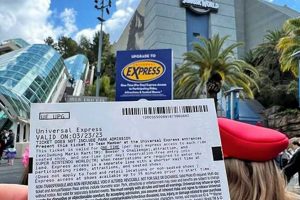
Tip 2: Leverage Express Pass: Consider purchasing the Universal Express Pass, which allows expedited access to participating attractions, significantly reducing time spent in standard queues. Determine if the cost justifies the potential time savings based on predicted crowd levels.
Tip 3: Arrive Before Park Opening: Arriving at the park entrance well before the official opening time allows access to popular attractions with minimal queuing. This is particularly effective for high-demand rides like “Hagrids Magical Creatures Motorbike Adventure.”
Tip 4: Target Single Rider Lines: Many attractions offer single rider lines, which can often provide significantly shorter queuing durations. If riding with companions, consider splitting up to take advantage of this option.
Tip 5: Visit During Off-Peak Seasons: Queuing durations are typically shorter during off-peak seasons, such as weekdays during the school year or periods immediately following major holidays. Plan visits accordingly to minimize potential delays.
Tip 6: Prioritize Less Popular Attractions During Peak Hours: During peak hours, focus on experiencing less popular attractions or shows, as these typically have shorter queuing intervals. Defer high-demand rides until later in the day or during evenings.
Tip 7: Utilize the Park Hopper Option Strategically: If possessing a park hopper ticket, monitor queuing across both Universal Studios Florida and Islands of Adventure. Reallocate time to the park with generally shorter waits at the desired attractions.
Employing these strategies allows guests to optimize their time, experiencing more attractions while minimizing queuing intervals. Proper planning, combined with real-time awareness, translates into a more fulfilling and efficient park experience.
The subsequent sections will delve into advanced techniques and resource management for further improving park visit efficiency.
1. Crowd Levels

Crowd levels at Universal Studios Orlando exhibit a direct and proportional relationship with queuing durations. As the number of individuals present within the park increases, the demand on each attraction proportionally rises, resulting in longer waiting durations. This relationship is not always linear, as specific areas or attractions may experience disproportionately higher concentrations of guests, creating localized congestion and impacting individual queuing estimates.
Understanding crowd levels constitutes a critical component for predicting and managing potential time spent in queues. Crowd level forecasts, often disseminated through third-party websites and crowd calendars, provide estimations of park attendance based on historical data, seasonal trends, and scheduled events. Elevated crowd levels correlate directly with extended queuing estimates. For instance, during the week of Christmas or Spring Break, queuing durations for popular attractions can easily exceed two to three hours, while during a weekday in early September, these same attractions may have waiting periods of under 30 minutes. The Universal Orlando Resort mobile application displays live queuing estimates to assist individuals in strategically managing their park visit.
Effective navigation and maximization of attraction access hinges on acknowledging and adapting to prevailing crowd levels. Individuals must consider predicted attendance when planning their visit, employing techniques such as arriving early, utilizing single rider lines, or purchasing Express Passes, particularly during periods of anticipated high attendance. Failure to account for crowd levels will invariably result in extended queuing intervals and a less efficient, less enjoyable park experience.
2. Ride Popularity

The inherent popularity of specific attractions at Universal Studios Orlando exerts a considerable influence on queuing durations. Highly sought-after rides invariably experience extended waits due to increased demand, irrespective of overall park attendance levels. Understanding the relative popularity of individual attractions is critical for effective itinerary planning and mitigating the impact of extended queuing.
- Technological Innovation and Immersion
Rides incorporating advanced technology, immersive theming, and unique storytelling elements typically exhibit heightened popularity. For instance, attractions such as “Harry Potter and the Forbidden Journey” and “Hagrids Magical Creatures Motorbike Adventure” utilize sophisticated ride systems and detailed environments, attracting significant guest interest and resulting in consistently longer queuing times. These rides frequently represent the “must-do” experiences for many visitors, driving demand.
- Critical Acclaim and Guest Reviews
Positive reviews and widespread critical acclaim contribute significantly to ride popularity. Attractions consistently ranked highly by guests and industry reviewers often experience elevated demand. Word-of-mouth recommendations and social media endorsements further amplify awareness and influence visitor choices, subsequently impacting queuing durations. This creates a self-perpetuating cycle, where highly-rated rides attract more visitors, increasing waiting intervals.
- Capacity and Throughput Limitations
The operational capacity and throughput of a ride significantly impact its queuing duration. Attractions with lower rider capacity or slower loading/unloading procedures tend to experience longer waits, even with moderate demand. For example, rides with complex pre-shows or limited seating arrangements inherently process fewer guests per hour compared to attractions with simpler operations. This operational constraint contributes to extended queuing intervals.
- Franchise Affiliation and Intellectual Property
Rides based on globally recognized franchises and popular intellectual property often exhibit higher popularity compared to attractions lacking such affiliations. The inherent appeal of established characters and narratives draws significant numbers of guests, resulting in increased demand. Attractions based on the “Harry Potter” franchise, for instance, consistently demonstrate high popularity due to the franchise’s widespread appeal, thus influencing queuing durations across multiple attractions within the Wizarding World areas.
In summary, the confluence of technological innovation, positive reviews, operational limitations, and franchise affiliation dictates the relative popularity of rides at Universal Studios Orlando. Consequently, these factors directly influence queuing durations, necessitating that park visitors account for these dynamics when strategizing their park visit to optimize their experience and minimize time spent in queues.
3. Seasonal Demand

Seasonal demand is a primary driver of fluctuations in queuing durations at Universal Studios Orlando. Specific periods throughout the year experience significantly elevated attendance due to holidays, school breaks, and special events. These periods of heightened demand directly correlate with increased queuing estimates across all attractions, effectively extending the average waiting duration for most rides and shows within the park. This phenomenon is a direct consequence of the increased volume of visitors exceeding the park’s capacity to accommodate them without resulting in extended queues.
Examples of peak seasonal demand include the summer months (June-August), the weeks surrounding Christmas and New Year’s Day, Spring Break (typically March-April), and major holiday weekends such as Memorial Day and Labor Day. During these times, queuing durations for popular attractions can routinely exceed two to three hours. Conversely, periods of lower seasonal demand, such as weekdays in early September or late January, typically exhibit significantly shorter waiting estimates. Understanding these patterns allows for more informed trip planning and the potential to minimize time spent in queues. Furthermore, Universal Studios Orlando often adjusts operational strategies, such as extending park hours or increasing staffing levels, to mitigate the impact of high seasonal demand, although queuing durations remain substantially elevated nonetheless.
Effectively anticipating and responding to seasonal demand is crucial for optimizing the park experience. Awareness of peak and off-peak periods empowers guests to make informed decisions regarding travel dates, park attendance strategies (such as utilizing Express Passes or arriving early), and overall expectations for queuing durations. Ignoring the influence of seasonal demand will invariably lead to longer waiting intervals and a potentially less enjoyable visit. Acknowledging and planning for these predictable fluctuations remains a fundamental element in managing and mitigating the impact of extended queuing times at Universal Studios Orlando.
4. Operational Efficiency

Operational efficiency at Universal Studios Orlando is a critical determinant of queuing durations. Optimized operational processes directly translate to reduced waiting intervals, positively impacting the overall guest experience. Inefficiencies, conversely, exacerbate queuing and diminish visitor satisfaction. The following facets explore the key aspects of operational efficiency influencing waiting estimates.
- Ride Throughput Optimization
Ride throughput, measured as the number of guests processed per hour, directly affects queuing estimates. Efficient loading and unloading procedures, coupled with maximized vehicle capacity, contribute to increased throughput. Conversely, delays in these processes, stemming from mechanical issues, guest-related incidents, or inefficient staffing, negatively impact throughput and extend waiting intervals. For example, optimizing the loading procedure on “The Incredible Hulk Coaster” to minimize dispatch intervals directly reduces the length of the queue. Inefficient processes directly impact the guest’s queuing experience and overall park satisfaction.
- Staffing Levels and Deployment
Adequate staffing levels, strategically deployed across attractions, are crucial for maintaining operational efficiency. Insufficient staff at loading stations, ride control panels, or queue management points can lead to delays and extended waiting periods. Effective staff training and optimized deployment strategies are essential for ensuring smooth operations and minimizing queuing durations. For instance, strategically positioning staff to direct guests through queues and efficiently load ride vehicles reduces bottlenecks and streamlines the flow of visitors. Understaffing directly translates to longer wait times, regardless of other operational factors.
- Maintenance and Downtime Management
Regular maintenance and proactive downtime management are vital for minimizing disruptions to ride operations. Unscheduled maintenance or prolonged downtime incidents result in temporary closures, significantly increasing queuing intervals for operating attractions. A comprehensive preventative maintenance program and rapid response protocols for addressing technical issues are essential for maintaining operational efficiency and mitigating queuing durations. Prolonged closure of a major attraction like “Jurassic Park River Adventure” can drastically increase the queue at nearby operating rides.
- Queue Management Techniques
Effective queue management techniques, including the use of switchback configurations, real-time queuing estimate displays, and interactive queue elements, contribute to a more efficient and manageable flow of guests. These strategies optimize queue capacity, provide visitors with accurate waiting information, and enhance the overall queuing experience. Poorly managed queues can lead to congestion, bottlenecks, and increased queuing durations. Providing accurate and updated wait times for “Race Through New York Starring Jimmy Fallon” can prepare guests and improve their overall experience, even if the wait is longer than anticipated.
In conclusion, the facets of operational efficiencythroughput optimization, staffing levels, downtime management, and queue management techniquesare inextricably linked to Universal Studios Orlando wait times. Improved efficiency across these areas results in reduced queuing intervals and an enhanced guest experience, highlighting the importance of continuous operational improvement and strategic resource allocation within the park.
5. Express Pass Usage

The utilization of Universal Express Passes directly and significantly impacts queuing durations for all guests at Universal Studios Orlando, both those who possess the pass and those who do not. The Express Pass system, which permits expedited access to participating attractions, inherently diverts a proportion of potential riders from the standard queue, influencing the waiting experience across the park. The overall effect is complex and multifaceted, requiring a detailed understanding of its components.
- Express Pass Volume and Queue Division
The number of Express Passes sold and the proportion of riders utilizing the Express Pass queue have a primary impact. A higher volume of Express Pass users corresponds with a greater diversion of guests from the standard queue, potentially reducing standard queuing intervals for non-Express Pass holders. However, an excessive volume of Express Pass users can lead to increased waiting times even within the Express Pass queue itself, and may diminish the intended benefit. For example, during peak seasons, the Express Pass queue for highly popular attractions can reach durations exceeding 30 minutes, demonstrating the variable impact of Express Pass volume.
- Attraction Capacity and Throughput Allocation
How Universal Studios Orlando allocates ride capacity between the standard queue and the Express Pass queue directly determines the benefit derived from the Express Pass. If an attraction allocates a disproportionately large percentage of its capacity to Express Pass users, the standard queue may experience significantly longer waiting durations. Conversely, a more balanced allocation can mitigate the impact on the standard queue while still providing a notable advantage to Express Pass holders. This allocation is not static and can be adjusted throughout the day based on real-time queuing estimates and overall park congestion.
- Operational Implementation and Queue Merging
The physical design of the queues and the point at which the Express Pass and standard queues merge influence the perceived and actual benefit of the Express Pass. An efficient merging process minimizes disruption to both queues, while a poorly designed merge point can create bottlenecks and negate some of the advantages of the Express Pass. The point of integration significantly impacts both queuing experiences.
- Dynamic Pricing and Demand Fluctuation
Universal Studios Orlando employs dynamic pricing for Express Passes, with prices fluctuating based on anticipated park attendance and demand. Higher prices tend to deter some potential purchasers, thereby reducing the volume of Express Pass users and potentially shortening standard queuing durations. Conversely, lower prices can increase Express Pass adoption, leading to longer waiting intervals within the Express Pass queue and potentially offsetting some of the intended benefit. Thus, pricing strategies have a knock-on impact across the park.
In summary, Express Pass utilization exerts a complex and multifaceted influence on Universal Studios Orlando wait times. The volume of Express Pass users, the allocation of ride capacity, the operational implementation of queue merging, and the dynamic pricing strategies all contribute to the overall queuing experience for both Express Pass holders and standard queue users. A comprehensive understanding of these interconnected factors is essential for optimizing individual park visit strategies and accurately assessing the value proposition of the Express Pass system.
6. Real-Time Monitoring

Real-time monitoring systems are integral to the management and dissemination of queuing durations at Universal Studios Orlando. These systems collect and process data related to queue lengths, ride throughput, and guest flow, providing dynamic updates on attraction waiting intervals. The accuracy and reliability of real-time monitoring directly influence visitors’ ability to plan their park itinerary effectively. For example, if the system accurately reports a 30-minute wait for “Transformers: The Ride-3D,” guests can make informed decisions about whether to join the queue or pursue alternative attractions. Inaccurate reporting, conversely, can lead to inefficient use of time and diminished satisfaction. The sensors and algorithms powering these systems continuously assess the queues and feed data to in-park displays and the official Universal Orlando Resort mobile application.
Real-time monitoring enables several critical functions beyond basic wait time display. The data collected informs operational decisions related to staffing levels, ride dispatch frequency, and crowd management strategies. For instance, if a real-time system detects a significant surge in queuing at “Hollywood Rip Ride Rockit,” park operators can allocate additional staff to the loading platform or temporarily adjust ride programming to increase throughput. The historical data generated through real-time monitoring also facilitates long-term planning, allowing Universal Studios Orlando to identify recurring bottlenecks, optimize park layout, and improve overall operational efficiency. Moreover, the system integrates with the Express Pass program, dynamically adjusting the allocation of riders between standard and express queues to manage queuing durations across the park.
The practical significance of real-time monitoring lies in its ability to empower visitors with actionable information and enable park operators to optimize resource allocation. Challenges remain in maintaining the accuracy of these systems in the face of fluctuating crowd levels and unforeseen operational disruptions. Continuous refinement of sensor technology, algorithm design, and data processing techniques is essential to ensure the ongoing reliability and effectiveness of real-time monitoring in managing and mitigating Universal Studios Orlando queuing durations. This technology represents a core element in the ongoing effort to improve the park experience.
7. Park Layout

The physical arrangement of Universal Studios Orlando significantly influences the distribution of guests and, consequently, the queuing durations experienced at individual attractions. The proximity of popular rides, the width of walkways, and the presence of themed areas all contribute to the overall flow of visitors and the concentration of queuing at specific locations.
- Themed Area Density and Attraction Grouping
The density of attractions within themed areas, such as the Wizarding World of Harry Potter, creates localized congestion and longer queuing at affiliated rides. Grouping multiple high-demand attractions in close proximity exacerbates this effect, as visitors navigate between rides, increasing pedestrian traffic and potentially impacting queuing outside the intended attraction. For example, the clustering of “Harry Potter and the Forbidden Journey,” “Hagrid’s Magical Creatures Motorbike Adventure,” and related shops in Hogsmeade often results in significantly elevated queuing across all three due to the area’s popularity and confined space. This clustering inherently concentrates visitors.
- Walkway Width and Pedestrian Flow
The width of walkways and the design of pedestrian pathways directly affect the flow of visitors and can contribute to bottlenecks and increased queuing. Narrow walkways, particularly in areas with high traffic volume, impede the movement of guests, leading to congestion and potentially impacting queuing at nearby attractions. A poorly designed pedestrian flow can create chokepoints, concentrating individuals and extending walking times between attractions, thus indirectly affecting the duration spent in queues, as more time is spent traveling.
- Proximity of Entertainment and Dining Options
The location of entertainment venues and dining establishments relative to popular rides can influence queuing durations. If restaurants or show venues are situated near high-demand attractions, the influx of individuals attending shows or seeking meals can contribute to congestion and impact queuing for nearby rides. Strategically placed entertainment and dining can disperse crowds; however, poorly planned placement can exacerbate queuing issues.
- Use of “Streets” and “Dead Ends”
The overall structure of the park, including the use of long “streets” and cul-de-sacs, affects visitor distribution. Longer, direct pathways can facilitate efficient movement between areas, whereas dead-end sections can trap visitors, creating pockets of congestion and impacting queuing at attractions within those sections. Well-planned pathways minimize congestion and facilitate smoother transitions between areas, directly influencing wait times.
In conclusion, the park layout at Universal Studios Orlando is inextricably linked to queuing durations. The density of themed areas, the width of walkways, the proximity of amenities, and the overall path structure all contribute to the distribution of guests and the formation of queues. Optimizing the park layout to improve pedestrian flow and reduce congestion is essential for mitigating queuing intervals and enhancing the overall visitor experience. The strategic placement of attractions and amenities, as well as thoughtful pathway design, are critical for managing crowd flow and minimizing the impact on “universal studios orlando wait times”.
Frequently Asked Questions
This section addresses common inquiries regarding queuing durations at Universal Studios Orlando, providing factual and objective information to aid in trip planning and expectation management.
Question 1: What factors contribute to fluctuating queuing durations at Universal Studios Orlando?
Queuing durations are affected by several variables, including overall park attendance, specific ride popularity, seasonal demand, operational efficiency in managing throughput, and the number of guests utilizing Express Pass. External elements such as weather conditions can also impact queuing intervals by altering ride availability.
Question 2: How can predicted queuing durations be accessed before visiting the park?
While precise queuing estimates are only available in real-time, historical data and crowd calendars can offer insights into anticipated attendance levels for specific dates. Third-party websites often provide crowd level predictions based on historical trends, which can be used to infer likely queuing durations. These estimates should be considered indicative rather than definitive.
Question 3: Are queuing durations generally longer on weekends compared to weekdays?
Generally, queuing durations tend to be longer on weekends and holidays due to increased park attendance. Weekdays, particularly during the school year, typically exhibit lower attendance and shorter waiting intervals. However, this pattern can vary based on seasonal events and specific attraction popularity.
Question 4: Does Universal Studios Orlando offer any tools for real-time queuing monitoring?
The Universal Orlando Resort mobile application provides real-time queuing estimates for attractions throughout both Universal Studios Florida and Islands of Adventure. In-park displays also present estimated queuing durations. This real-time data enables informed decision-making during a park visit.
Question 5: What is the impact of Express Pass on standard queuing durations?
Express Pass allows expedited access to attractions, diverting a portion of riders from the standard queue. While this diversion can potentially reduce waiting intervals for standard queue users, the magnitude of the impact is contingent on the number of Express Passes sold and the allocation of ride capacity between the two queues. A higher volume of Express Pass holders may lessen the benefit to standard queue riders.
Question 6: What actions does Universal Studios Orlando take to mitigate long queuing durations?
Universal Studios Orlando employs various strategies to manage queuing durations, including adjusting staffing levels, optimizing ride throughput, extending park hours during peak seasons, and implementing crowd management techniques within queue areas. The park also uses real-time monitoring to dynamically adjust operational strategies in response to fluctuating attendance patterns.
Effective management of queuing durations requires a multi-faceted approach, encompassing awareness of contributing factors, utilization of available tools for real-time monitoring, and strategic planning to optimize park navigation.
The concluding section will offer a look towards the future of “universal studios orlando wait times” and potential technological advancements.
Conclusion
This exploration of Universal Studios Orlando wait times has illuminated the multifaceted factors influencing the queuing experience. From seasonal demand and ride popularity to operational efficiency and Express Pass usage, a complex interplay of elements shapes the duration individuals spend in queues. Real-time monitoring and strategic park layout are instrumental in mitigating these durations, but ongoing diligence is essential to optimize the guest experience.
As technological advancements continue, innovative queue management solutions may emerge, potentially transforming the landscape of theme park visits. Guests are encouraged to leverage available resources and plan proactively, ensuring a more efficient and enjoyable exploration of Universal Studios Orlando, despite the inherent challenges posed by “universal studios orlando wait times”. Addressing the future of the queuing experience remains a priority for optimizing visitor satisfaction.