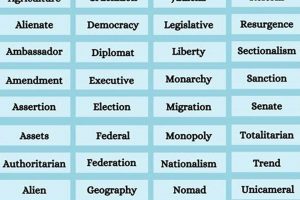
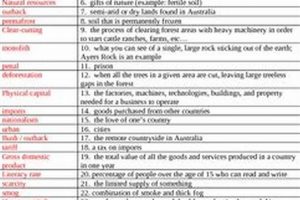
The subject matter typically encompasses history, geography, civics, economics, and sociology. Instruction provides students with a foundational understanding of human societies, cultures, and interactions across time and space. For example, a lesson might examine the causes and consequences of the American Revolution, analyze the impact of geographic features on settlement patterns, or explore the principles of democratic governance.
Knowledge in these areas is vital for informed citizenship, critical thinking, and responsible participation in a globalized world. It allows individuals to analyze current events, understand diverse perspectives, and contribute meaningfully to public discourse. Historically, social studies education has evolved from a focus on rote memorization of facts to an emphasis on inquiry-based learning and the development of analytical skills.
The curriculum prepares students to engage with complex social issues, evaluate sources of information, and form well-reasoned opinions. It fosters an appreciation for cultural diversity and promotes an understanding of the interconnectedness of societies. This provides a solid base for further academic pursuits and active involvement in community and national affairs.
Effective Methodologies
The following are suggestions for enhancing educational practices within the social sciences.
Tip 1: Primary Source Integration: Incorporate original documents, artifacts, and eyewitness accounts into lessons. This fosters critical thinking by requiring students to analyze information directly.
Tip 2: Structured Debates and Discussions: Organize classroom debates on relevant social issues. Providing students with structured arguments and requiring evidence-based claims promotes analytical reasoning.
Tip 3: Inquiry-Based Learning: Employ inquiry-based projects that allow students to investigate historical events or contemporary social problems. This methodology encourages independent research and problem-solving skills.
Tip 4: Visual Aid Utilization: Employ maps, charts, photographs, and videos to illustrate complex concepts and events. Visual aids enhance comprehension and retention of information.
Tip 5: Current Event Integration: Relate historical and theoretical concepts to current events. This demonstrates the relevance of social sciences to contemporary issues and encourages civic engagement.
Tip 6: Differentiated Instruction: Adapt teaching strategies to accommodate diverse learning styles and abilities. Providing varied instructional materials and assessment methods ensures that all students can access the curriculum.
Tip 7: Historical Simulations: Implement simulations that allow students to role-play historical figures or participate in significant events. This immersive experience promotes empathy and a deeper understanding of historical context.
Implementation of these techniques improves student engagement, promotes critical thinking, and cultivates a deeper appreciation for the social sciences.
These strategies contribute to a more effective and enriching social studies education.
1. Historical Events

A fundamental component involves the study of events from the past, shaping the core material. These events provide a necessary framework for understanding the present and anticipating potential future societal trajectories.
- Causation and Consequence
The analysis of cause-and-effect relationships is paramount. By examining the factors that led to specific events and their subsequent outcomes, students develop critical thinking skills. For instance, studying the Treaty of Versailles necessitates an understanding of its impact on the rise of nationalism in Germany, ultimately contributing to World War II.
- Patterns and Trends
Recurring patterns and trends across different historical periods offer insights into human behavior and societal development. The rise and fall of empires, for example, reveal recurring themes related to power, governance, and social structure. Recognizing these patterns enables students to better interpret contemporary events.
- Multiple Perspectives
Historical events are rarely viewed uniformly; studying diverse perspectives is crucial. Examining primary source documents from various social groups involved in a particular event allows for a more nuanced understanding. For example, analyzing the Civil Rights Movement involves considering the viewpoints of activists, government officials, and ordinary citizens from different racial backgrounds.
- Historical Significance
Determining the significance of events involves assessing their long-term impact and relevance to the present. Some events, like the invention of the printing press or the discovery of penicillin, fundamentally altered the course of human history. Evaluating historical significance requires careful analysis and critical judgment.
Through exploring historical events, students gain a broader understanding of human society, develop essential analytical skills, and become more informed and engaged citizens. This forms a cornerstone of social studies education, equipping individuals to navigate the complexities of the modern world.
2. Civic Responsibility

Civic responsibility constitutes a core tenet of social studies education, informing the curriculum and instructional practices. The development of informed, engaged, and responsible citizens is a primary objective, underscoring the significance of instilling civic values and knowledge.
- Understanding Government Structures and Functions
A fundamental aspect is acquiring a comprehensive understanding of government structures at the local, state, and national levels. This includes studying the roles and responsibilities of elected officials, the functions of different government branches, and the process of lawmaking. For example, learning about the US Constitution and its amendments provides a framework for understanding the rights and responsibilities of citizens. This knowledge enables individuals to participate effectively in the political process.
- Active Participation in Democratic Processes
Beyond knowledge acquisition, active participation in democratic processes is emphasized. This involves encouraging students to engage in activities such as voting, volunteering in the community, contacting elected officials, and participating in peaceful protests. Understanding the importance of civic engagement empowers students to become active participants in shaping their communities and nation.
- Respect for Laws and Rules
A key element of civic responsibility is fostering respect for laws and rules. Students learn about the purpose of laws, the importance of following them, and the consequences of violating them. This includes discussing the role of the judicial system and the principles of justice and fairness. Emphasizing the importance of lawfulness contributes to the maintenance of order and the protection of individual rights.
- Ethical Decision-Making and Community Involvement
Cultivating ethical decision-making skills and encouraging community involvement are integral to promoting civic responsibility. Students learn to analyze ethical dilemmas, consider different perspectives, and make informed decisions that benefit the community. Participating in community service projects, such as volunteering at local organizations or advocating for social causes, fosters a sense of responsibility and connection to the community.
These facets of civic responsibility are intentionally integrated into the social studies curriculum, fostering critical thinking, promoting informed participation, and cultivating responsible citizenship. By equipping students with the knowledge, skills, and values necessary for active engagement, social studies education plays a vital role in shaping the future of democratic societies.
3. Geographic Literacy

Geographic literacy, a foundational element of social studies instruction, provides the framework for understanding the spatial dimensions of human activity. A comprehension of geography equips students with the ability to analyze the relationship between physical environments and societal development. Its inclusion demonstrates a direct effect on the capacity to contextualize historical events, interpret economic patterns, and assess geopolitical relationships. Without this understanding, events and trends lack the depth provided by considering their location, spatial distribution, and environmental context.
Real-world examples illustrate the practical significance. For instance, understanding climate patterns in agricultural regions informs the study of food production and global trade. Knowledge of political boundaries and natural resources aids in analyzing international conflicts. Population distribution patterns reveal demographic trends impacting social and economic policies. The ability to interpret maps, analyze spatial data, and understand geographic concepts proves crucial for informed decision-making in various aspects of life. The absence of this skill impairs comprehension of global issues and limits effective participation in a globalized society.
In summary, geographic literacy is not merely a supplementary subject; it is an integral component of effective social studies education. It empowers students to analyze complex issues through a spatial lens, enhancing their understanding of history, civics, and economics. While challenges exist in effectively integrating geographic concepts into existing curricula, the benefits of fostering geographic literacy far outweigh these obstacles. It prepares individuals to navigate a world increasingly shaped by spatial relationships and global interconnectedness.
4. Economic Principles

Instruction in fundamental economic principles forms a crucial part of social studies education, influencing students’ comprehension of societal structures and global dynamics. Understanding scarcity, supply and demand, market structures, and economic systems (e.g., capitalism, socialism, mixed economies) provides a framework for analyzing resource allocation, production, distribution, and consumption patterns. This knowledge enables students to contextualize historical events, interpret contemporary socio-political issues, and make informed decisions as consumers, producers, and citizens. For example, comprehending the laws of supply and demand clarifies the price fluctuations observed in various markets, while knowledge of economic systems helps analyze different approaches to wealth distribution and social welfare.
The inclusion of economic principles in social studies has direct practical applications. Students can analyze the impact of government policies (e.g., taxation, regulation) on economic growth and social equity. They can also evaluate the effects of globalization, trade agreements, and technological advancements on employment, wages, and living standards. Understanding economic indicators such as GDP, inflation, and unemployment rates helps to assess the overall health of an economy. Furthermore, this knowledge empowers individuals to make informed financial decisions, manage personal finances responsibly, and participate effectively in economic policy debates.
In summary, the integration of economic principles into social studies education equips students with the analytical tools and knowledge necessary to understand the complexities of economic systems and their impact on individuals, societies, and the global community. By fostering economic literacy, social studies instruction empowers students to engage in informed discussions, make responsible choices, and contribute to a more just and sustainable economic future. While challenges exist in effectively integrating complex economic concepts into the curriculum, the benefits of fostering economic understanding are undeniable. It prepares students to navigate an increasingly interconnected and economically driven world.
5. Cultural Awareness

A significant portion of social studies instruction concentrates on promoting cultural awareness. This involves cultivating an understanding and appreciation of diverse cultures, traditions, values, and perspectives. This dimension of education serves to mitigate ethnocentrism and fosters empathy among students. Cultural awareness as a component is integral for comprehending historical events, social structures, and geopolitical relationships. The impact manifests in informed analyses of global issues, such as immigration, international relations, and human rights.
Real-world examples illustrate the practical significance of cultural awareness. Understanding the cultural context of a particular region is vital for effective diplomacy and international business. Knowledge of diverse religious beliefs promotes tolerance and understanding in multicultural societies. Studying the art, music, and literature of different cultures enriches understanding of human creativity and expression. Examining cultural differences in communication styles facilitates effective cross-cultural interactions. Instruction in cultural awareness extends beyond rote memorization of facts; it fosters critical thinking and encourages students to challenge their own assumptions and biases.
In summary, the inclusion of cultural awareness is critical to effective instruction. It equips students with the cognitive and affective skills necessary to navigate an increasingly interconnected world, promotes tolerance and understanding, and fosters responsible global citizenship. Integrating cultural perspectives across the social studies curriculum presents challenges. The long-term benefits derived from fostering empathy and intercultural competence are essential. The importance of cultural awareness cannot be overstated, as it prepares individuals to engage with diverse perspectives, bridge cultural divides, and contribute to a more inclusive and equitable society.
Frequently Asked Questions
This section addresses common inquiries regarding the scope and purpose of social studies education.
Question 1: What specific academic disciplines are encompassed within the social studies curriculum?
The curriculum typically includes history, geography, civics, economics, sociology, anthropology, and psychology. The integrated approach aims to provide a holistic understanding of human society and its development.
Question 2: Why is the study of history considered essential within social studies education?
Historical knowledge provides context for understanding present-day events and societal structures. Analyzing past events allows students to identify patterns, understand causation, and develop critical thinking skills necessary for informed decision-making.
Question 3: How does the study of civics contribute to the development of responsible citizens?
Civics education equips students with an understanding of government structures, political processes, and the rights and responsibilities of citizens. It encourages active participation in democratic governance and fosters a commitment to civic values.
Question 4: What is the significance of teaching geography within the social studies framework?
Geographic literacy enables students to understand the spatial dimensions of human activity and the relationship between physical environments and societal development. It enhances the understanding of international relations, resource management, and environmental issues.
Question 5: Why are economic principles included in the social studies curriculum?
Economic literacy equips students with the analytical tools necessary to understand how societies allocate resources, produce goods and services, and distribute wealth. This knowledge is essential for informed participation in economic policy debates and responsible financial decision-making.
Question 6: How does social studies education promote cultural awareness and understanding?
The curriculum aims to foster an appreciation for diverse cultures, traditions, and perspectives. By studying different societies and their histories, students develop empathy, challenge their own biases, and become more effective global citizens.
In conclusion, these FAQs illustrate the breadth and depth of social studies education, emphasizing its vital role in preparing informed, engaged, and responsible citizens.
The next section explores strategies for enhancing the effectiveness of social studies instruction.
What a Social Studies Teacher Teaches
The preceding discussion delineated the multifaceted nature of instruction. It encompasses history, civics, geography, economics, and cultural awareness, forming the bedrock of informed citizenship. Students learn to analyze the past, understand governmental structures, appreciate spatial relationships, comprehend economic systems, and respect cultural diversity. The integration of these disciplines prepares individuals to engage critically with the complexities of the modern world.
The subject matter therefore necessitates ongoing dedication to curricular innovation and pedagogical refinement. Its continued relevance hinges on its ability to equip future generations with the knowledge and skills required to navigate an increasingly interconnected and challenging global landscape. The responsibility lies in ensuring that these lessons empower individuals to shape a more informed, just, and equitable future.