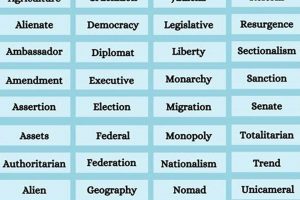
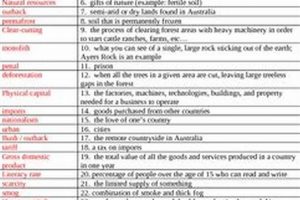
Inquiries within the realm of civic education encompass a wide range of topics designed to foster critical thinking and understanding of societal structures. These inquiries delve into areas such as history, geography, economics, and government. An instance of such an inquiry would be: “How did the Industrial Revolution impact population distribution?” This type of inquiry requires analysis, evaluation, and the application of knowledge across various disciplines.
Engagement with these types of inquiries is vital for developing informed and responsible citizens. A strong grasp of historical events provides context for understanding contemporary challenges. Furthermore, exploring geographical concepts enhances appreciation for global interconnectedness. Comprehending economic principles enables individuals to make sound financial decisions, and knowledge of government structures promotes active participation in democratic processes. Historically, these inquiries have been a cornerstone of education, shaping societal progress and promoting informed discourse.
The following sections will explore effective strategies for formulating and utilizing these inquiries, various question types employed within the discipline, and practical applications for educators and students alike. Focus will be directed toward maximizing the impact of inquiry-based learning across the social sciences.
Strategies for Effective Inquiry in Civic Education
The following strategies are designed to enhance the development and utilization of effective inquiries within the civic education curriculum.
Tip 1: Foster Critical Thinking: Design inquiries that require students to analyze information, evaluate sources, and formulate reasoned arguments. Example: Instead of asking “What were the causes of World War I?”, pose the inquiry “To what extent was nationalism the primary cause of World War I? Support your argument with evidence.”
Tip 2: Promote Interdisciplinary Connections: Craft inquiries that bridge multiple disciplines within civic education, such as history, geography, economics, and political science. Example: Explore the effects of a historical event on economic policy by asking “How did the Great Depression influence the development of social security systems in the United States?”
Tip 3: Encourage Source Evaluation: Incorporate inquiries that necessitate the assessment of primary and secondary sources. Example: “Compare and contrast different accounts of the Civil Rights Movement from various perspectives. What biases might exist in each source?”
Tip 4: Stimulate Civic Engagement: Develop inquiries that connect classroom learning to real-world issues and encourage active participation in civic life. Example: “How can local government address the issue of homelessness in our community? Research potential solutions and propose a plan of action.”
Tip 5: Utilize Inquiry-Based Learning: Implement an inquiry-based teaching approach. Structure learning around student-generated inquiries rather than relying solely on direct instruction. Example: Begin a unit on environmental policy by asking “What are the most pressing environmental challenges facing our planet today?”
Tip 6: Refine Question Formulation: Avoid closed-ended or leading inquiries. Focus on crafting open-ended inquiries that invite exploration and debate. Replace “Was the New Deal successful?” with “To what extent did the New Deal alleviate the economic hardship of the Great Depression?”
Effective utilization of these strategies will promote deeper understanding and active engagement with core concepts in civic education, leading to more informed and responsible citizens.
The ensuing discourse will address the application of these strategies in diverse learning environments and highlight additional resources for educators.
1. Historical Analysis

Historical analysis forms a cornerstone of inquiries within civic education, providing context and perspective to contemporary societal issues. Comprehending past events allows for the identification of patterns, the evaluation of consequences, and the recognition of the long-term effects of decisions made by individuals and institutions. Such analysis, when integrated into inquiries, transforms them from mere factual recall exercises into opportunities for critical evaluation and informed judgment. For instance, investigating the causes of the American Revolution necessitates examining economic policies, social structures, and political ideologies, thereby revealing the complex interplay of factors that led to significant societal upheaval. These same principles can be applied to understand current social movements or international conflicts.
The incorporation of primary source materials is integral to rigorous historical analysis. Examining documents, letters, and speeches from the past allows for a more nuanced understanding of perspectives and motivations. Inquiring into the rationale behind the Treaty of Versailles, for example, requires analyzing the perspectives of the Allied powers, Germany, and the emerging global powers. This type of source-based inquiry promotes the development of critical thinking skills, enabling individuals to differentiate between factual information and biased interpretations. Further, considering the context of each source the author, audience, and purpose is crucial for discerning potential influences and assessing credibility.
Ultimately, the capacity to conduct historical analysis is crucial for responsible citizenship. By understanding the historical roots of present-day challenges, individuals are better equipped to engage in informed discussions, propose effective solutions, and participate meaningfully in democratic processes. Though challenges such as historical revisionism and biased interpretation remain, a commitment to evidence-based analysis and critical evaluation is essential for fostering a deeper understanding of the past and its relevance to the present.
2. Geographical Awareness

Geographical awareness serves as a critical lens through which inquiries within civic education are contextualized and understood. It furnishes a spatial framework for analyzing social, political, and economic phenomena, highlighting the interdependence between human activities and the environment.
- Spatial Distribution and Resource Allocation
Understanding the spatial distribution of natural resources is fundamental to comprehending economic disparities and international relations. For example, examining the uneven distribution of oil reserves clarifies geopolitical strategies and trade agreements. Inquiries might involve analyzing the impact of resource scarcity on political stability or the environmental consequences of resource extraction.
- Cultural Diffusion and Regional Identity
Geographical factors influence the diffusion of cultural traits and the formation of regional identities. Mountain ranges, rivers, and coastlines can act as barriers or conduits for the spread of languages, religions, and customs. Exploration within civic education might involve analyzing the impact of geographical isolation on cultural preservation or the role of migration patterns in shaping cultural diversity.
- Environmental Sustainability and Climate Change
Geographical awareness is essential for addressing environmental sustainability and mitigating the effects of climate change. Understanding climate zones, ecosystems, and land use patterns informs the development of effective conservation strategies and policies. Inquiries might focus on the impact of deforestation on biodiversity, the effects of rising sea levels on coastal communities, or the role of renewable energy in reducing carbon emissions.
- Political Boundaries and Geopolitics
The delineation of political boundaries is often shaped by geographical features, historical events, and power dynamics. Understanding the geographical context of border disputes, territorial claims, and geopolitical alliances is crucial for comprehending international relations. Inquiries might involve analyzing the impact of colonialism on the redrawing of political maps, the role of geography in shaping national identity, or the strategic importance of certain geographical locations.
In summary, geographical awareness is interwoven with aspects of civic education. The insights it provides regarding spatial distribution, cultural diffusion, environmental sustainability, and political boundaries significantly enrich the depth and relevance of the inquiries within the field, fostering a more holistic understanding of complex issues.
3. Civic Engagement

Civic engagement, when viewed through the framework of inquiries within civic education, emerges as a multifaceted concept encompassing diverse forms of participation and responsibility within a community or nation. The ability to formulate pertinent inquiries is intrinsically linked to informed civic action, equipping individuals with the tools to understand complex issues and contribute meaningfully to public discourse. These inquiries, when effectively addressed, foster a deeper understanding of societal challenges and encourage active participation in the democratic process.
- Informed Voting and Electoral Participation
Effective electoral participation relies on a nuanced understanding of policy issues, candidate platforms, and the historical context of political debates. Inquiries that explore the history of voting rights, the influence of campaign finance, or the potential impacts of proposed legislation empower citizens to make informed decisions at the ballot box. Example: “How has gerrymandering affected the representativeness of Congressional districts?”
- Community Involvement and Volunteerism
Active participation in community initiatives and volunteer efforts stems from a sense of responsibility and a desire to contribute to the well-being of others. Inquiries exploring local needs, the effectiveness of community organizations, or the impact of social policies can inspire individuals to become actively involved in addressing challenges within their neighborhoods. Example: “What are the root causes of food insecurity in our city, and what actions can citizens take to alleviate this issue?”
- Advocacy and Political Activism
Advocacy for specific causes and active engagement in political movements require a thorough understanding of the issues at hand and the mechanisms for influencing public policy. Inquiries that delve into the history of social movements, the role of lobbying groups, or the process of legislative reform equip citizens with the knowledge and skills to effectively advocate for their beliefs. Example: “How have social movements historically utilized civil disobedience to achieve social change?”
- Responsible Media Consumption and Digital Citizenship
In the digital age, responsible media consumption and active digital citizenship are essential for maintaining an informed electorate and promoting civil discourse. Inquiries exploring media bias, the spread of misinformation, or the impact of social media on political polarization can help individuals navigate the complex media landscape and engage responsibly in online discussions. Example: “What are the potential consequences of algorithmic bias in social media platforms on democratic processes?”
The interrelation of engagement in civic duties and these types of questions highlights a fundamental truth: informed action necessitates well-informed inquiry. As citizens strive to effect positive change within their communities and the broader world, the ability to formulate and address pertinent questions becomes paramount. This synthesis enables a more profound comprehension of challenges and fosters effective participation in the democratic process.
4. Economic Understanding

Economic understanding, when integrated into the framework of inquiries within civic education, provides essential tools for analyzing societal issues related to resource allocation, production, distribution, and consumption. This understanding equips individuals to evaluate the economic impact of policies, assess the efficiency of markets, and participate effectively in economic decision-making processes.
- Market Structures and Competition
Inquiries into market structures (e.g., perfect competition, monopoly, oligopoly) illuminate the dynamics of supply and demand, pricing strategies, and barriers to entry. For instance, investigating the effects of a monopoly on consumer prices and innovation highlights the importance of antitrust regulations. Exploration might involve analyzing the impact of globalization on domestic industries or the role of government subsidies in promoting specific sectors.
- Fiscal and Monetary Policy
Understanding fiscal policy (government spending and taxation) and monetary policy (central bank interest rates and money supply) is crucial for evaluating the economic impact of government actions. An inquiry could involve analyzing the effectiveness of stimulus packages during economic recessions or the consequences of high inflation on consumer purchasing power. Exploration might involve debating the merits of different tax systems or the role of government debt in long-term economic growth.
- International Trade and Globalization
Inquiries into international trade and globalization provide insight into the benefits and challenges of economic integration. Examining the impact of trade agreements on employment, wages, and economic inequality is vital for informed policy debates. Exploration might involve analyzing the effects of tariffs on trade flows or the role of international organizations in regulating global finance.
- Economic Inequality and Poverty
Understanding the causes and consequences of economic inequality and poverty is essential for promoting social justice and economic opportunity. Inquiries into income distribution, wealth accumulation, and access to education and healthcare illuminate the structural barriers that perpetuate poverty. Exploration might involve analyzing the impact of minimum wage laws on poverty rates or the effectiveness of social safety net programs in reducing inequality.
These elements underscore the connection between a robust understanding of economic principles and the capacity to formulate and analyze effective inquiries. Equipped with these tools, individuals can approach societal problems more effectively and advocate for informed solutions in diverse contexts.
5. Critical Evaluation

Critical evaluation forms an indispensable component of robust inquiries within civic education. These inquiries, by their very nature, require more than simple factual recall; they demand an analytical approach that scrutinizes sources, assesses evidence, and formulates reasoned judgments. The cause-and-effect relationship is clear: a lack of critical evaluation renders inquiries superficial and undermines the development of informed perspectives. A prime illustration lies in studying historical events. An inquiry such as “What were the main reasons for the Cold War?” necessitates critical evaluation of diverse sources, ranging from government documents to personal narratives. The student must discern biases, weigh evidence, and construct a coherent argument supported by factual data. Without this critical lens, conclusions may be skewed or based on incomplete information, negating the inquiry’s educational value.
The practical significance of integrating critical evaluation into civic education is substantial. It equips individuals with the skills to navigate the complexities of the modern information age, where misinformation and propaganda are prevalent. Consider the analysis of media coverage during elections. A critical evaluator will not accept information at face value but will instead assess the source’s credibility, identify potential biases, and compare different accounts. This ability to dissect information and form independent judgments is crucial for responsible citizenship and informed decision-making. Furthermore, the skill of critical evaluation extends beyond the realm of civic education, proving valuable in various aspects of life, from career choices to personal relationships. It promotes rational thought, evidence-based decision-making, and the capacity to engage in constructive dialogue.
In summary, the integration of critical evaluation into civic education inquiries is not merely an added benefit; it is a necessity. It strengthens the learning process, fosters informed perspectives, and equips individuals with the skills to navigate the complexities of the modern world. Addressing challenges such as students’ lack of experience in critical thinking or the overwhelming amount of information available requires targeted pedagogical strategies and access to reliable resources. Ultimately, the cultivation of critical evaluation skills is a cornerstone of effective civic education and a crucial ingredient for responsible and engaged citizenship, contributing significantly to the themes previously explored.
Frequently Asked Questions Regarding Social Studies Questions
The following questions address common points of inquiry concerning the nature, purpose, and implementation of effective methods of investigation within the realm of civic education.
Question 1: What distinguishes effective inquiries from standard test inquiries within the context of civic education?
Effective inquiries promote critical thinking and demand comprehensive answers based on evidence. Standard test inquiries predominantly seek factual recall or multiple-choice selection. Effective inquiries encourage deeper analysis and synthesis of information.
Question 2: How does the utilization of primary sources contribute to the rigor of inquiries in civic education?
Primary sources provide firsthand accounts and original documents that enable individuals to evaluate historical events and social phenomena from multiple perspectives. This process enhances the analytical dimension of inquiries and supports informed conclusions.
Question 3: What role does interdisciplinary integration play in the formulation of effective inquiries?
Interdisciplinary integration fosters a more holistic understanding of complex societal issues. By drawing on multiple disciplines (e.g., history, geography, economics), inquiries can address multifaceted problems more comprehensively.
Question 4: In what ways can effective inquiries promote active civic engagement among students?
Inquiries designed to connect classroom learning with real-world issues and local contexts can inspire students to participate in community initiatives, advocate for policy changes, and become informed voters. This active engagement fosters a sense of civic responsibility.
Question 5: What strategies exist for mitigating bias in the formulation and interpretation of inquiries?
Mitigating bias involves careful source selection, acknowledgment of diverse perspectives, and rigorous evaluation of evidence. Awareness of potential biases and a commitment to objectivity are essential for maintaining the integrity of inquiries.
Question 6: How can educators effectively assess the quality of answers derived from social education inquiries?
The assessment should focus on the depth of analysis, the quality of evidence presented, the coherence of the argument, and the ability to engage with diverse perspectives. Rubrics that explicitly define these criteria can provide a structured framework for assessment.
These inquiries serve as a starting point for delving deeper into the complexities of civic education and for promoting more informed and responsible civic engagement.
The following section will provide additional resources for educators and students interested in furthering their understanding of these concepts.
Conclusion
The preceding exploration has highlighted the pivotal role inquiries play in shaping effective civic education. The ability to formulate relevant and thought-provoking queries, to critically evaluate sources, and to connect classroom learning with real-world issues constitutes the bedrock of informed citizenship. A curriculum devoid of such analytical rigor risks producing individuals ill-equipped to navigate the complexities of the modern world and to participate meaningfully in democratic processes. The discussions regarding historical analysis, geographical awareness, civic engagement, economic understanding, and critical evaluation have served to underscore the interconnectedness of these disciplines and their collective contribution to a well-rounded education.
The effective implementation of such civic inquiries necessitates a sustained commitment from educators, policymakers, and students alike. Fostering a culture of inquiry, encouraging critical thinking, and providing access to reliable resources are crucial steps in preparing future generations to address the challenges and opportunities that lie ahead. The pursuit of knowledge through informed inquiry remains an indispensable tool for promoting a more just, equitable, and prosperous society. Further research and development are needed to maximize the impact of civic education. It remains incumbent upon all stakeholders to ensure that these critical methods are effectively integrated into educational systems.