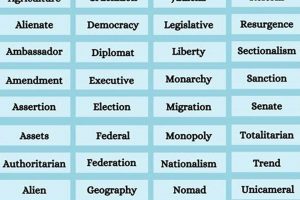
Instruction in civics, history, geography, economics, and related social sciences equips students with the knowledge and skills necessary for informed participation in a democratic society. This instructional area fosters critical thinking, problem-solving, and decision-making abilities. Examples include analyzing historical events, understanding governmental structures, and interpreting economic data.
Developing citizens who are knowledgeable about their world, both past and present, is a core benefit. This curriculum promotes civic engagement, cultural understanding, and responsible citizenship. Historically, its development has been influenced by societal needs, evolving pedagogical approaches, and changing perspectives on citizenship.
The subsequent sections will delve into specific methodologies for effective implementation, examine relevant curriculum standards, and explore strategies for addressing diverse learning needs within this vital academic area.
Effective Approaches to Curriculum Delivery
The following outlines several recommendations designed to enhance the delivery of content within the specified academic domain. Adherence to these guidelines can promote student engagement and improve learning outcomes.
Tip 1: Emphasize Primary Source Analysis: Incorporating original documents, artifacts, and first-hand accounts fosters critical thinking. Students should be guided to analyze sources for bias, perspective, and historical context. For instance, analyzing letters from soldiers during wartime can provide a deeper understanding of the conflict’s human impact.
Tip 2: Promote Active Learning Strategies: Employ methods that require students to actively participate in the learning process. This includes debates, simulations, role-playing, and project-based learning. A mock trial, for example, allows students to engage with legal concepts and develop argumentation skills.
Tip 3: Integrate Interdisciplinary Connections: Draw connections between concepts and other subject areas, such as literature, art, and science. Exploring the scientific advancements of a particular historical period alongside its social and political developments provides a more holistic understanding.
Tip 4: Foster Civic Engagement Opportunities: Encourage participation in local government, community service, or advocacy initiatives. Such experiences provide students with practical skills in citizenship and social responsibility. Organizing a voter registration drive, for instance, directly involves students in the democratic process.
Tip 5: Utilize Technology Effectively: Incorporate digital tools and resources to enhance instruction. This could include online databases, interactive maps, virtual field trips, and digital storytelling platforms. A virtual tour of an ancient civilization allows students to explore historical sites remotely.
Tip 6: Differentiate Instruction: Adapt teaching methods and materials to meet the diverse learning needs of all students. This may involve providing varied levels of support, offering flexible assignments, and using multiple modalities for presenting information. Some students may benefit from visual aids, while others may prefer auditory learning.
Tip 7: Assess for Understanding, Not Just Recall: Employ formative and summative assessments that measure students’ ability to apply knowledge, analyze information, and solve problems. Instead of simply testing memorization, assess their ability to interpret data or evaluate different perspectives.
Implementing these strategies can lead to a more enriching and impactful learning experience, equipping students with the skills and knowledge necessary to become informed and engaged citizens.
The subsequent section will address common challenges encountered during curriculum implementation and offer potential solutions.
1. Curriculum Design

Curriculum design constitutes the foundational framework upon which the effective transmission of civic knowledge, historical understanding, and geographic awareness is built. It dictates the scope, sequence, and depth of content to be covered, directly influencing students’ comprehension of societal structures and processes.
- Content Selection and Organization
The process of selecting relevant and age-appropriate content is paramount. This involves discerning key historical events, significant political concepts, and essential economic principles. Organizing this content into a logical sequence, such as chronological or thematic structures, facilitates comprehension and retention. For example, a curriculum unit on the American Revolution might begin with the causes of the conflict, progress through key battles and political debates, and conclude with an analysis of its long-term consequences.
- Alignment with Learning Objectives
Clearly defined learning objectives guide the design process. These objectives articulate what students should know, understand, and be able to do as a result of the curriculum. A well-designed curriculum ensures that all activities, assessments, and resources directly contribute to achieving these objectives. An objective such as “Students will be able to analyze the causes of World War I” should drive the selection of primary sources, research activities, and essay prompts related to that period.
- Integration of Diverse Perspectives
A comprehensive curriculum incorporates diverse perspectives and voices, ensuring that students are exposed to multiple interpretations of historical events and social phenomena. This includes considering the experiences of marginalized groups, acknowledging biases in historical narratives, and fostering critical thinking about different points of view. For instance, a unit on westward expansion in the United States should include perspectives from Native American tribes affected by the movement.
- Assessment Strategies
Curriculum design must incorporate varied assessment strategies to gauge student understanding and provide feedback. This includes formative assessments, such as class discussions and short quizzes, as well as summative assessments, such as exams and research projects. Assessment should measure not only factual recall but also the ability to apply knowledge, analyze sources, and construct arguments. A well-designed curriculum includes rubrics and clear expectations for each assessment task.
These facets underscore the importance of thoughtful curriculum design in facilitating the acquisition of crucial civic and historical knowledge. A well-structured curriculum provides students with the tools they need to become informed, engaged, and responsible citizens.
2. Inquiry-Based Learning

Inquiry-based learning represents a student-centered pedagogical approach that emphasizes exploration, questioning, and critical analysis within the context of civic, historical, and geographic studies. Its application within this subject area aims to foster deeper understanding and engagement with complex social issues by empowering students to actively construct their own knowledge.
- Formulating Research Questions
At the heart of inquiry-based learning lies the ability to formulate meaningful research questions. Students are encouraged to identify areas of personal interest or societal concern and then develop questions that guide their investigation. For instance, instead of simply memorizing the causes of the Civil War, students might formulate questions such as “To what extent was slavery the primary cause of the Civil War?” or “How did different groups of people experience the Civil War?” These questions propel the inquiry process and encourage students to seek evidence-based answers.
- Gathering and Evaluating Evidence
Once a research question is established, students embark on the process of gathering relevant evidence from a variety of sources. This includes primary source documents, secondary source analyses, statistical data, and expert opinions. Critically evaluating the credibility, bias, and perspective of each source is crucial to ensuring the accuracy and reliability of the information used to answer the research question. Examining newspaper articles from different regions during the Civil Rights Movement, for example, would provide students with contrasting perspectives on the events unfolding.
- Developing Arguments and Drawing Conclusions
After gathering and evaluating evidence, students must synthesize their findings and develop well-reasoned arguments to support their conclusions. This involves analyzing patterns, identifying connections, and constructing a coherent narrative that addresses the original research question. Students might present their findings in the form of research papers, presentations, debates, or multimedia projects. This step requires critical thinking, analytical skills, and the ability to effectively communicate complex ideas.
- Reflecting on the Learning Process
The final stage of inquiry-based learning involves reflecting on the learning process itself. Students consider what they have learned, how their thinking has evolved, and what challenges they encountered along the way. This reflection helps them to develop metacognitive skills and become more self-directed learners. Students might write reflective journals, participate in group discussions, or create presentations that summarize their learning journey.
By fostering active investigation and critical thinking, inquiry-based learning promotes a deeper understanding of the complexities within social systems and prepares students to engage meaningfully with civic challenges. This methodology contrasts with rote memorization, emphasizing analytical skills crucial for responsible citizenship and a nuanced understanding of past and present events.
3. Source Analysis

Source analysis forms a cornerstone of effective instruction within the realm of civics, history, and related social sciences. The ability to critically examine primary and secondary sources directly impacts a student’s capacity to construct informed perspectives on past and present events. A direct correlation exists between rigorous source analysis skills and the development of well-reasoned arguments regarding societal issues. Without proficient analysis, students risk accepting information uncritically, perpetuating misinformation, and formulating skewed understandings of complex social phenomena. For example, examining conflicting accounts of the Boston Massacre necessitates careful consideration of each author’s perspective and potential biases to arrive at a balanced interpretation of the event.
The practical application of source analysis extends beyond the classroom. Individuals equipped with these skills are better positioned to evaluate news articles, political rhetoric, and online content, thereby contributing to a more informed and engaged citizenry. Consider the analysis of political campaign advertisements. A student trained in source analysis can dissect the ad’s messaging, identify persuasive techniques, and assess the validity of the claims presented. Similarly, understanding the provenance and purpose of statistical data is crucial for interpreting economic trends and evaluating policy proposals. These examples illustrate how source analysis provides tangible benefits to individuals navigating an increasingly complex information landscape.
In summary, source analysis constitutes an indispensable component of social science education. Its absence undermines the core objectives of cultivating critical thinking, fostering civic engagement, and promoting informed decision-making. While challenges exist in teaching these skills effectively, the potential benefits of equipping students with the ability to analyze sources warrant significant investment in pedagogical strategies and curriculum development. The cultivation of these skills serves as a vital safeguard against misinformation and a catalyst for informed civic participation.
4. Civic Engagement

Civic engagement, encompassing active participation in the public life of a community, stands as a central objective of instruction in civics, history, and related social sciences. The development of informed and responsible citizens constitutes a primary rationale for the inclusion of these disciplines within educational curricula. The following facets detail the relationship between civic engagement and this instruction.
- Knowledge of Governmental Structures and Processes
Effective civic engagement necessitates a foundational understanding of governmental structures, political processes, and legal frameworks. Instruction in these areas provides students with the tools to navigate the complexities of the political system, comprehend policy debates, and participate effectively in democratic institutions. For example, understanding the roles and responsibilities of different branches of government, the process of lawmaking, and the importance of voting are essential for informed civic action. Students who understand these concepts are better equipped to advocate for policy changes, hold elected officials accountable, and contribute to public discourse.
- Development of Critical Thinking and Communication Skills
Civic engagement requires the ability to critically analyze information, evaluate competing perspectives, and communicate effectively with diverse audiences. Instruction in civics fosters these skills by encouraging students to engage in debates, research policy issues, and present their findings in a clear and persuasive manner. For instance, analyzing political speeches, evaluating news sources, and participating in mock legislative sessions can enhance students’ critical thinking and communication abilities. These skills are crucial for participating in public discourse, engaging in constructive dialogue, and advocating for their beliefs.
- Cultivation of Civic Values and Dispositions
Civic engagement is rooted in a set of core values and dispositions, such as respect for the rule of law, commitment to social justice, and willingness to engage in civil discourse. Instruction in civics aims to cultivate these values by exposing students to historical examples of civic action, exploring ethical dilemmas, and promoting a sense of responsibility to the community. Studying the Civil Rights Movement, for example, can inspire students to stand up for equality and justice. Participating in community service projects can foster a sense of empathy and responsibility. These experiences can cultivate a commitment to civic participation and social responsibility.
- Opportunities for Active Participation
Effective promotion of civic engagement necessitates providing students with opportunities to participate actively in their communities. This may involve volunteering, participating in student government, engaging in political campaigns, or advocating for policy changes. Such experiences provide students with practical skills in civic action and a deeper understanding of the challenges and rewards of civic participation. Organizing a voter registration drive, advocating for environmental protection, or participating in a community cleanup project provide students with hands-on experiences in civic engagement. These opportunities demonstrate the power of individual action and empower students to make a difference in their communities.
These interlinked facets highlight the critical role of instruction in civics, history, and related social sciences in fostering informed and engaged citizens. The incorporation of these elements into educational programs equips students with the knowledge, skills, values, and opportunities necessary to participate actively in the democratic process and contribute to the betterment of their communities. Without these foundations, effective and responsible civic participation remains severely compromised.
5. Differentiated Instruction

Differentiated instruction, a pedagogical approach tailored to individual student needs, holds particular significance within instruction in civics, history, geography, and related social sciences. The inherent diversity within classrooms, characterized by varying learning styles, readiness levels, and cultural backgrounds, necessitates instructional practices that transcend a one-size-fits-all methodology. Failure to implement differentiated strategies risks disenfranchising students, limiting their comprehension of complex social concepts, and hindering their ability to engage effectively with civic responsibilities. For example, a student with strong visual learning preferences might benefit from graphic organizers and maps when studying historical events, whereas an auditory learner might excel through class discussions and audio recordings. Adapting instructional materials and activities to accommodate these diverse learning preferences is crucial for ensuring equitable access to the curriculum.
The practical applications of differentiated instruction within instruction in civics, history, and related social sciences are manifold. Content can be differentiated by providing students with access to varied reading materials at different levels of complexity. Process can be differentiated by offering students choices in how they demonstrate their understanding, such as through essays, presentations, or multimedia projects. Product can be differentiated by allowing students to explore topics of personal interest within the broader curriculum. For instance, when studying the American Revolution, some students might choose to focus on the role of women, others on the economic factors contributing to the conflict, and still others on the military strategies employed by each side. These choices allow students to engage with the material in ways that are meaningful and relevant to their individual interests and learning styles.
In summary, differentiated instruction constitutes an essential component of effective instruction in civics, history, and related social sciences. By adapting content, process, and product to meet the diverse needs of all students, educators can create a more engaging and equitable learning environment. The challenges associated with implementing differentiated instruction, such as the time required for planning and preparation, are outweighed by the potential benefits for student learning and civic engagement. Further exploration into specific differentiation strategies and assessment techniques will continue to enhance the efficacy of this approach within instructional settings.
6. Historical Empathy

The cultivation of historical empathy constitutes a critical objective within instruction in civics, history, and related social sciences. It moves beyond mere memorization of facts and dates, striving instead to foster a nuanced understanding of past events through the lens of those who lived them. This approach requires students to consider the motivations, beliefs, and cultural contexts that shaped the actions and decisions of individuals and groups in the past.
- Understanding Contextual Perspectives
Historical empathy demands the ability to understand actions within their specific historical context. This involves recognizing that past societies operated under different sets of values, norms, and constraints than those of the present. For example, judging historical figures by contemporary ethical standards without acknowledging the prevailing social norms of their time impedes genuine understanding. Understanding the social hierarchy and economic realities of the Roman Empire is crucial to comprehending the actions of its citizens, even those actions that might seem morally objectionable today.
- Recognizing Multiple Narratives
Historical events are rarely viewed uniformly; diverse groups often experience the same event in vastly different ways. Historical empathy entails acknowledging these multiple narratives and understanding the perspectives of marginalized or underrepresented groups. Examining the American Civil War, for instance, requires considering the experiences of enslaved African Americans, Southern plantation owners, and Northern abolitionists to gain a complete understanding of the conflict’s complexities.
- Avoiding Presentism and Anachronism
A key aspect of historical empathy involves avoiding presentism, the tendency to interpret the past through the lens of present-day values and beliefs, and anachronism, the imposition of modern ideas or technologies onto the past. Projecting contemporary notions of human rights onto societies that did not share those notions distorts historical understanding. Similarly, assuming that people in the past possessed the same knowledge and technological capabilities as those in the present leads to inaccurate interpretations.
- Developing Emotional Intelligence
Cultivating historical empathy often requires developing emotional intelligence, the ability to understand and share the feelings of others. This involves recognizing that historical actors were driven by emotions such as fear, hope, grief, and anger, and that these emotions played a significant role in shaping their actions. Reading personal letters or diaries from historical figures can provide valuable insights into their emotional states and motivations. Empathizing with the struggles and aspirations of individuals in the past can foster a deeper connection to history and a greater appreciation for the human experience.
These elements, integrated into instruction in civics, history, and related social sciences, enhance students’ comprehension of complex historical events and cultivate a sense of global citizenship. The development of historical empathy prepares individuals to engage with diverse perspectives, appreciate cultural differences, and address contemporary challenges with a more nuanced and informed understanding of the human condition. A commitment to historical empathy safeguards against the repetition of past mistakes by promoting a more enlightened and compassionate view of the world.
7. Critical Thinking

Critical thinking serves as an indispensable component of instruction in civics, history, geography, economics, and other social sciences. The capacity to analyze information objectively, evaluate arguments rigorously, and formulate reasoned judgments directly influences a student’s ability to understand complex social issues and participate effectively in a democratic society. Without critical thinking skills, individuals may be susceptible to misinformation, propaganda, and biased interpretations of historical events and contemporary social phenomena. For example, understanding the complexities of climate change requires students to critically evaluate scientific data, assess the credibility of different sources, and weigh the potential consequences of various policy options. This analytical process is essential for making informed decisions about environmental sustainability.
The application of critical thinking extends beyond the classroom. In practical terms, individuals equipped with these skills are better positioned to assess the claims made by politicians, evaluate the accuracy of news reports, and understand the underlying assumptions of economic policies. For instance, analyzing the arguments for and against a particular trade agreement necessitates the ability to identify logical fallacies, evaluate statistical evidence, and understand the potential impacts on different sectors of the economy. A student trained in critical thinking can dissect the various viewpoints and formulate an informed opinion based on evidence rather than emotional appeals or unsubstantiated claims.
In summary, critical thinking is essential for effective instruction in civics, history, and related social sciences. It fosters informed citizenship, promotes responsible decision-making, and equips individuals with the skills necessary to navigate an increasingly complex and information-rich world. The integration of critical thinking activities into the curriculum poses challenges, including the need for effective pedagogical strategies and rigorous assessment methods. However, the benefits of cultivating these skills far outweigh the difficulties, reinforcing the importance of prioritizing critical thinking in social science education to prepare informed, engaged, and responsible citizens.
Frequently Asked Questions about Instruction in Civics, History, and Related Social Sciences
This section addresses common inquiries and misconceptions regarding the delivery of instruction within the domain of civics, history, geography, economics, and related social sciences. The responses provided aim to offer clarity and guidance to educators and stakeholders invested in fostering informed and engaged citizens.
Question 1: What constitutes “effective” instruction in social sciences?
Effective instructional practices encompass a range of methodologies, including inquiry-based learning, primary source analysis, and differentiated instruction. The ultimate goal is to cultivate critical thinking, historical empathy, and civic engagement, enabling students to become informed and responsible members of society.
Question 2: Why is primary source analysis so heavily emphasized?
Primary source analysis allows students to directly engage with the past, fostering critical thinking skills and providing insights into diverse perspectives. It moves beyond rote memorization of textbook narratives, encouraging students to evaluate evidence and construct their own interpretations of historical events.
Question 3: How can instruction in civics address issues of bias and perspective?
A comprehensive approach acknowledges diverse viewpoints and actively explores potentially biased narratives within historical and contemporary contexts. Encouraging students to analyze sources critically and consider multiple perspectives can mitigate the impact of bias and promote a more nuanced understanding of complex social issues.
Question 4: What are the key challenges in cultivating civic engagement among students?
Challenges include student apathy, lack of access to civic opportunities, and perceived disconnect between classroom learning and real-world issues. Overcoming these challenges requires innovative pedagogical approaches, community partnerships, and opportunities for students to participate actively in civic processes.
Question 5: How does differentiated instruction address the diverse learning needs of students?
Differentiated instruction recognizes that students learn in different ways and at different paces. Adapting content, process, and product to meet individual needs ensures that all students have equitable access to the curriculum and opportunities to succeed.
Question 6: What role does technology play in instruction in civics, history, and related social sciences?
Technology can enhance instruction by providing access to online resources, interactive simulations, and digital storytelling platforms. However, it’s crucial to use technology purposefully, aligning it with learning objectives and promoting critical thinking skills rather than simply replacing traditional methods.
In summary, effective instruction in the social sciences necessitates a multifaceted approach that prioritizes critical thinking, civic engagement, and historical empathy. Addressing common misconceptions and challenges through informed pedagogical practices can empower students to become knowledgeable, responsible, and engaged citizens.
The following section will delve into assessment techniques in this area.
Conclusion
The preceding discussion has examined various facets of teaching social studies, encompassing pedagogical approaches, curriculum design, and the cultivation of crucial skills such as critical thinking, source analysis, and historical empathy. Effective implementation requires a commitment to fostering informed civic engagement and adapting instructional strategies to meet diverse learning needs. The exploration has underscored the multifaceted nature of this educational domain, highlighting the interconnectedness of content knowledge, pedagogical expertise, and a dedication to preparing students for responsible citizenship.
The sustained commitment to excellence in teaching social studies remains paramount. The future necessitates continued innovation in pedagogical practices, a persistent focus on equitable access to high-quality instruction, and an unwavering dedication to equipping students with the knowledge and skills necessary to navigate the complexities of an ever-changing world. Only through such efforts can societies ensure the cultivation of informed, engaged, and responsible citizens capable of contributing meaningfully to the common good.